
The Espresso Knock Box That Stays Put
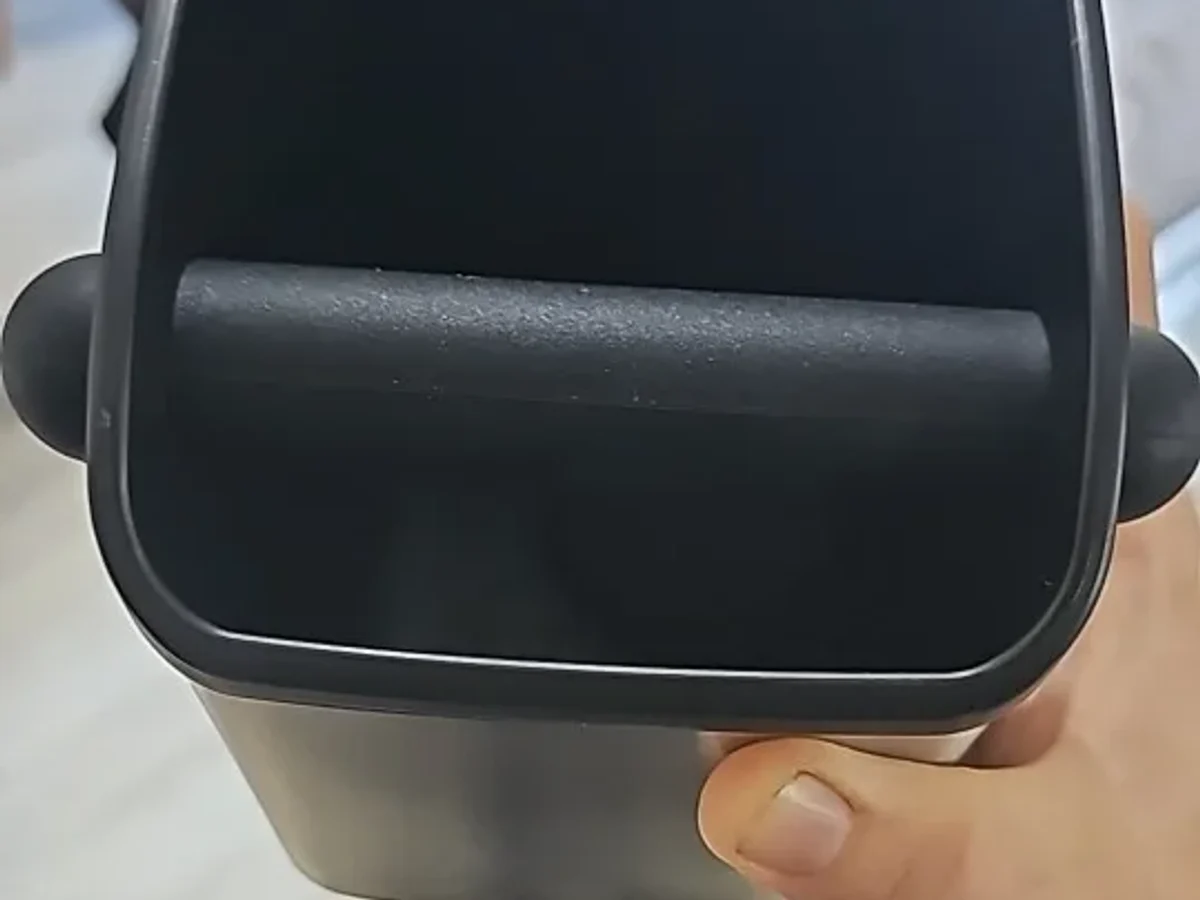
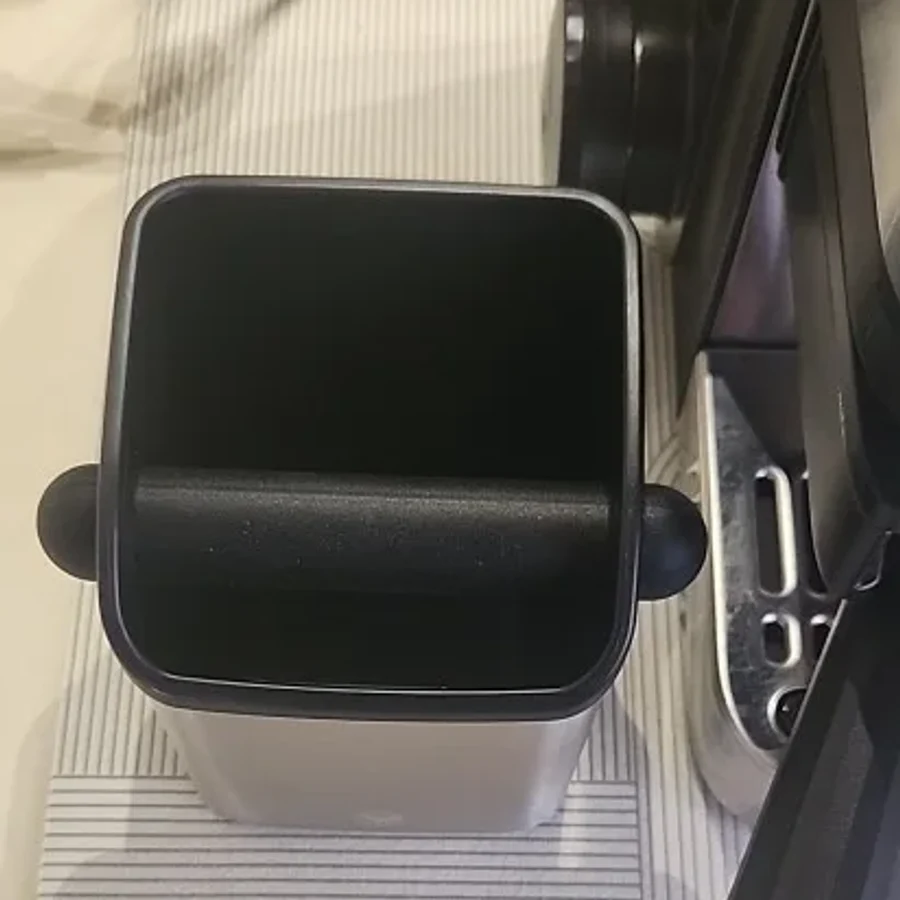
Stainless steel, a rubber bar that takes the hit, and a weighted base that does not slide when you knock hard. 700 ml (24 fl oz), so it swallows a morning of shots.
What a knock box actually solves
Anyone who pulls shots at home meets the same small problem within a week. The puck has to go somewhere, and neither obvious answer works.
Knocking the portafilter on the edge of a bin scatters grounds across the counter and puts a dent in the basket rim over time. Rinsing it into the sink is worse, and plumbers are unanimous on why: coffee grounds do not dissolve. They clump, they bind with the grease already in the trap, and they set. It is a slow problem that shows up months later as a drain that runs slow, then not at all.
The knock box removes the choice. The bar takes the impact instead of the rim, the puck drops in whole, and the grounds stay in one container until you empty it into the compost or the bin.
The motion is worth describing, because it is the part nobody explains. You hold the portafilter by the handle, bring it down so the rim meets the bar at roughly a right angle, and knock once — firmly. Not a tap. A spent puck is compressed at nine bars and it is holding onto the basket; a hesitant knock leaves half of it stuck and you end up digging it out with a spoon, which is how baskets get scratched.
That single firm knock is exactly what a light box cannot survive. Strike it properly and it travels, or tips. So you knock more gently, and you are back to digging pucks out by hand. Weight in the base is not a luxury on a knock box — it is what makes the tool work as intended.
There is a second reason this matters more than it used to. Espresso has moved into the kitchen: the share of American households owning an espresso machine rose from 8% to 12%, and seven in ten coffee drinkers now make it at home only. A machine that used to live behind a counter, emptied into a purpose-built bin, now sits next to a domestic sink — and the sink is the one place the grounds must not go.
Three things that decide whether you keep using it
Steel, not plastic
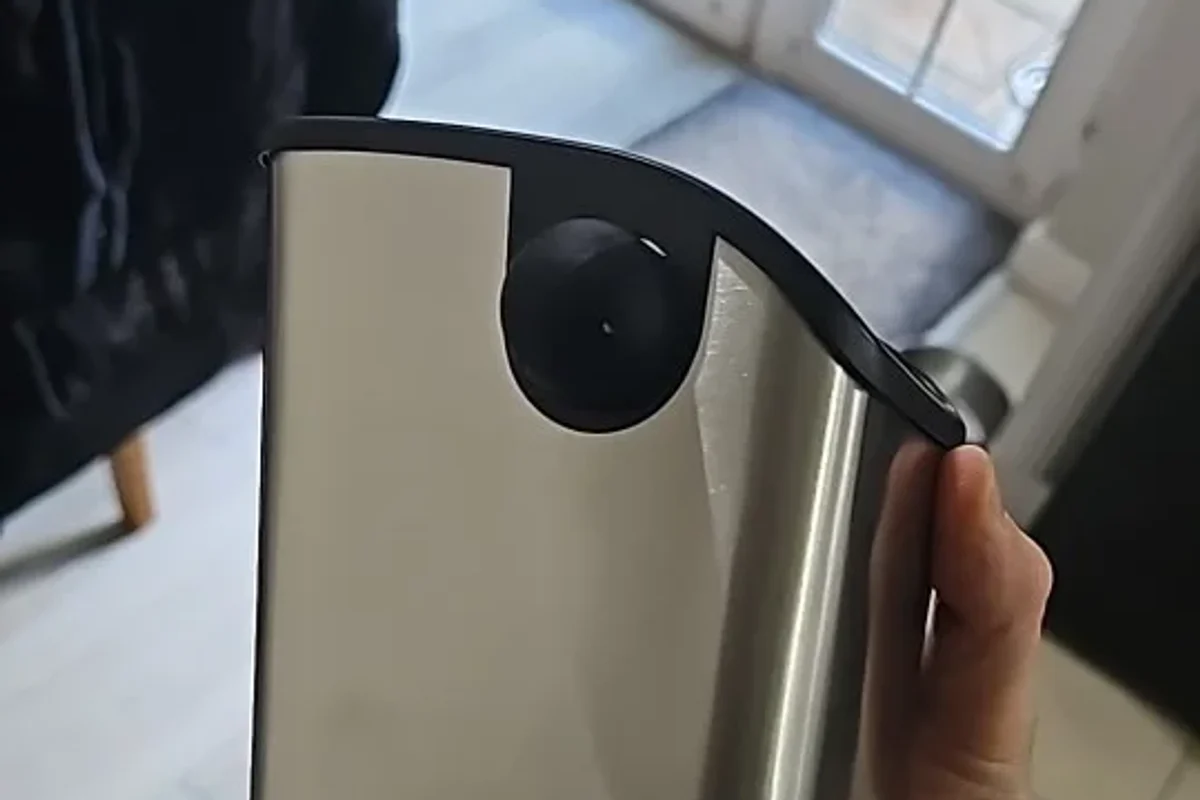
The body is brushed stainless steel. It does not stain from coffee oils, it does not scuff pale after a few months, and it wipes clean with a cloth instead of needing a scrub.
Plastic knock boxes are lighter and cheaper to make, and they show it. Coffee oil works into the surface and stays there, and the first time a hot portafilter touches the rim it leaves a mark. Steel takes the same treatment and looks the same a year later — which matters for something that lives on the counter rather than in a cupboard.
Coffee oil is the part people underestimate. Roasted beans carry oils that survive extraction and coat everything the grounds touch. On a porous surface those oils soak in, oxidise, and go rancid — which is where the stale smell in an old knock box comes from. It is not the grounds you emptied yesterday. It is a year of oil in the material itself.
Stainless steel does not absorb them. The oils sit on the surface and come off with hot water and a cloth, which is why the cleaning instruction for this box is one sentence long rather than a procedure involving soaking and scrubbing.
A bar that gives, a base that does not
The knock bar is rubber over a steel core, mounted on two posts. It absorbs the strike so the impact never reaches the basket rim, and it lifts out in one movement when you rinse the box.
The bar is where a knock box is won or lost. Too soft and the puck does not release. Too hard and you are hammering a machined aluminum rim against metal every morning. This one is rubber over a rigid core, which gives just enough, and it comes out for cleaning rather than trapping grounds underneath it.
The rim of a portafilter basket is machined to sit flush against the group head gasket. That fit is what holds pressure during extraction. Deform the rim — slowly, one hard knock at a time against something unforgiving — and the seal starts to leak at the edges. It shows up as a shot that sprays sideways, and most people blame the grind long before they think of the thing they knock against every morning.
The height of the bar matters too. Set too low and the handle catches the edge of the box on the way down; set too high and the puck bounces back out. On this one it sits at the height a portafilter naturally reaches on the arc of a knock, which is why it takes one strike rather than three.
700 ml (24 fl oz), and an angled mouth
The mouth is cut on an angle so the opening faces you as you knock, and the 700 ml (24 fl oz) body holds a morning of shots. One buyer puts it at around ten cups before emptying.
A straight-sided box makes you aim down into a hole. The angled cut brings the opening toward you, so the puck drops in on the natural arc of the knock rather than needing a second tap. The capacity is the other half of it: small enough to sit beside the machine, deep enough that emptying is a once-a-day job.
Seven hundred millilitres is easier to picture in pucks. A double shot leaves a puck of roughly 18 grams (0.6 oz) of spent grounds, damp and compressed. The box holds a morning of them for a household pulling several shots, which is what one buyer meant by around ten cups before emptying.
Emptying daily is still the right habit, and not because the box runs out of room. Spent grounds hold water. Left for several days in any sealed container, damp grounds ferment — and that is true of every knock box ever made, in any material. The box you empty each morning never gets the chance.
Four things that decide whether a knock box gets used
Four things decide whether a knock box gets used or ends up in a cupboard. Here is where this one stands on each.
| Property | Why it matters | This box |
|---|---|---|
| Bar removes | A fixed bar traps wet grounds underneath | Lifts out in one movement |
| Base stays put | A box that slides makes you knock too gently | Weighted, non-slip |
| Body resists coffee oil | Plastic stains and scuffs pale | Brushed stainless steel |
| Capacity fits a morning | Under 500 ml (17 fl oz) means emptying mid-service | 700 ml (24 fl oz) |
Why those four, and not the ten a spec sheet lists
The bar has to come out. This is the one that separates a box you keep from a box you replace. Grounds work their way under a fixed bar, sit there damp, and there is no way to reach them — so the box smells and the only cure is to throw it away. A bar that lifts out turns cleaning into ten seconds under a tap. It is also the part that wears first, being the part you strike every day.
The base has to hold. A knock box that travels across the counter trains you to knock softly, and a soft knock does not release a puck compressed at nine bars. So you knock twice, then three times, then you start prying the puck out with a spoon. Every downstream problem people blame on a knock box starts here, with a base too light for the job it was bought to do.
The body has to resist coffee oil. Roasted coffee carries oils that survive extraction. On a porous surface they soak in, oxidise, and go rancid, which is where the stale smell of an old box actually comes from — not from yesterday's grounds. Stainless steel keeps them on the surface, where hot water removes them.
The capacity has to match a morning. Not a week: a morning. Anything that holds less has you emptying it between shots, which is the moment most people give up and go back to the bin. Anything designed to hold days of grounds is designing for something you should not be doing anyway, because damp grounds ferment.
Everything else on a spec sheet — the exact height, the finish, the packaging — changes how a knock box looks. These four change whether you still use it in six months.
Espresso moved into the kitchen
of US households now own an espresso machine, up from 8%
— National Coffee Association, National Coffee Data Trends, 2025
of American adults drank an espresso-based beverage in the past week
— National Coffee Association, National Coffee Data Trends, 2025
of past-day coffee drinkers made it at home only, up from 63% in 2020
— National Coffee Association, National Coffee Data Trends, 2025
Three ways to empty a portafilter
| Method | What happens to the counter | What happens to the basket | Long term |
|---|---|---|---|
| Knock box | Grounds stay in the box | Bar takes the impact, rim untouched | Empty once a day, rinse the bar |
| Edge of the bin | Grounds scatter, bin lid gets sticky | Rim strikes a hard edge every time | Dented rim, grounds underfoot |
| Sink or disposal | Clean, for about a month | Fine | Grounds bind with grease and set in the trap |
Plumbers are consistent on the third row: coffee grounds do not dissolve. They clump, they hold onto the grease already in the pipe, and the blockage shows up months after the habit starts. A garbage disposal makes it worse rather than better — it grinds the particles finer, and finer particles travel further down the line before they settle, past the reach of a standard sink snake. The old advice that coffee grounds "clean" a drain is the one piece of kitchen folklore every drain company spends its week disproving.
It is a newer problem than it looks. With espresso machines now in 12% of American households — up from 8% — and 71% of coffee drinkers brewing at home only, a great many kitchen sinks are meeting spent pucks for the first time.
The knock bar is the only part that touches your machine every single day. If it is too hard, you are peening an aluminum rim against metal every morning, and you will see it on the basket long before you see it on the box.— Dane Whitlock, Founder, Barwright — fifteen years behind bars and in equipment service
Using one, and the two mistakes everyone makes first
Knock once and firmly, at a right angle, and empty it every morning. Those two habits cover almost everything that goes wrong with a knock box.
The first mistake is knocking too gently. It feels like the careful thing to do — it is someone's espresso machine, after all — but a spent puck is compressed at nine bars and it grips the basket. A hesitant knock leaves a ring of grounds welded to the walls, and the fix people reach for is a spoon or a fingernail, both of which scratch a basket that costs more than the box.
One firm knock, rim square to the bar, and the puck comes out whole. If it does not, the answer is a slightly firmer knock rather than three soft ones, and this is exactly why the weight of the base matters: you can only knock with conviction on something that stays where you put it.
The second mistake is treating it as a bin. A knock box is a staging area, not storage. Spent grounds come out of the machine wet and warm, which is the condition every fermentation on earth is waiting for. Two days is fine. Five is a smell you will notice from across the kitchen, and that has nothing to do with the box — it is true of any container, in any material.
Everything else is minor. Rinse the bar when you empty it, because the underside is where grounds collect. Dry the inside if you are putting it away rather than leaving it out. And do not put the grounds down the sink on your way past — the whole point of owning the box is that you have somewhere better to put them. The motion itself, step by step, is in how to use a knock box.
What to do with the grounds
They compost well and they go straight onto a garden bed around anything that tolerates slightly acidic soil — roses, blueberries, hydrangeas. They are also reasonable at deterring slugs, though nobody should buy a knock box for that.
If you have no garden and no compost, the household bin is the right answer and there is nothing wrong with it. The point was never that spent coffee is precious. The point is that it leaves the kitchen in a container rather than through a pipe.
Choosing a knock box
What separates one from another
Capacity first. Under about 500 ml (17 fl oz) you empty it every day, sometimes twice. Around 700 ml (24 fl oz) covers a household pulling several shots each morning without becoming a bin that lives on the counter.
Then the bar. Look for rubber over a rigid core rather than solid plastic, and check it lifts out. A fixed bar traps wet grounds underneath, and that is the part that starts to smell.
Then the base. Weight is what stops a knock box traveling across the counter when you strike it properly. A light box makes you knock timidly, and a timid knock leaves half the puck in the basket.
Material last, but it decides how it ages. Steel and plastic both work on day one. Six months in, one of them still looks like it did.
Check the mouth, not just the volume. Two boxes of identical capacity behave differently depending on how the opening is cut. A straight top makes you aim; an angled one presents the opening to the portafilter as it comes down. It is the difference between one knock and two, every single morning.
And think about where it will actually live. A knock box is not stored, it sits out — usually within arm's reach of the machine, on the counter, in view. A drawer-style unit that mounts under the machine solves that differently and costs considerably more. A countertop box has to be something you do not mind looking at, which is a real criterion even if it feels like a soft one.
Specifications
| Material | Stainless steel body |
| Capacity | 700 ml (24 fl oz) |
| Knock bar | Rubber over a rigid core, removable |
| Mouth | Cut on an angle, faces the user |
| Base | Weighted, non-slip |
| Finish | Brushed silver |
Capacity and materials are the figures published for this box. For counter space, the practical guide is that it occupies roughly the footprint of a large mug.
Rated 4.9 / 5 across 120 verified buyers
"Perfect! Large enough to use easily and probably holds 10+ used portafilter grounds, yet compact enough not to take up too much space. Easy to clean."
— Alfie R., verified buyer
"Very durable, looks very good near the coffee machine."
— Oscar L., verified buyer
"Quality item and sturdy, the knock box appears stylish and clean and well made. The base ensures it stays where you want it to when emptying the coffee puck."
— Isaac H., verified buyer
See our reviews page for more.
Questions we get
Do I actually need a knock box?
If you pull espresso at home more than a couple of times a week, yes. The puck has to leave the basket somewhere, and the two free options both cost you later: the bin scatters grounds and dents the rim, the sink sends grounds into a trap where they bind with grease and set. A knock box is the only option that keeps both the counter and the pipes out of it.
How full can I let it get?
The body holds 700 ml (24 fl oz), which is a morning of shots for most households — one buyer puts it at around ten cups before emptying. To picture it in pucks: a double shot leaves roughly 18 grams (0.6 oz) of damp, compressed grounds, so the capacity is a comfortable day rather than a week. Empty it daily anyway, and not because it runs out of room. Spent grounds come out warm and wet, and wet grounds left several days in any sealed container ferment — that is true of every knock box ever made, in any material. The one you empty each morning never gets the chance.
Will knocking damage my portafilter?
Not against a rubber bar. The bar is rubber over a rigid core, so it gives under the strike and the impact never reaches the basket rim. What damages a rim is knocking it against something hard and unforgiving, which is exactly what the edge of a bin is. The reason it matters is that the rim is machined to sit flush against the group head gasket, and that fit is what holds pressure while the shot pulls. Deform it slowly, one hard knock at a time, and the seal starts leaking at the edges — which shows up as a shot spraying sideways, a fault most people spend weeks blaming on their grind.
Does the bar come out for cleaning?
Yes, it lifts out of its two posts in one movement. This matters more than it sounds: on a fixed-bar box, wet grounds collect underneath the bar where you cannot reach them, and that is the part that starts to smell first.
Will it slide when I knock hard?
The base is weighted and non-slip, which is the point of it. A light knock box travels across the counter, and once it does you start knocking gently to keep it in place — and a gentle knock leaves half the puck stuck in the basket.
What can I do with the used grounds?
They compost well, and they go straight into a garden bed around anything that likes slightly acidic soil — roses, blueberries and hydrangeas all take them happily. Spread them thinly rather than in a thick layer, because a dense mat of grounds can cap the soil and shed water instead of letting it through. If you have neither a garden nor a compost heap, the household bin is the right answer. The point was never that spent coffee is precious; it is that it leaves the kitchen in a container rather than through a pipe.
How do I clean it?
Lift out the bar, tip the grounds, rinse both under hot water and dry with a cloth. Coffee oil does not work into stainless steel the way it works into plastic, so a rinse is usually all it needs. No scrubbing, no soaking.
How long does delivery take?
Orders are processed in 1 to 2 business days and arrive in 6 to 10 business days in total. Shipping is free, and every order is covered by a 30-day money-back guarantee.
Give the puck somewhere to go
Stainless steel, removable bar, weighted base. Free shipping and 30 days to change your mind.
Add to Cart →